The first solo flight is a rite of passage unlike anything else in aviation. The moment your CFI steps out of the aircraft, endorses your logbook, and you taxi out alone — something fundamental changes. No other milestone in training comes close to it emotionally. Pilots remember their first solo for the rest of their lives, often recalling the exact weather, the exact runway, the exact feeling when the wheels left the ground with no one in the right seat.
This guide covers everything you need to know: the requirements, the preparation, what your CFI is actually evaluating, what the moment feels like, and what happens in the weeks after.
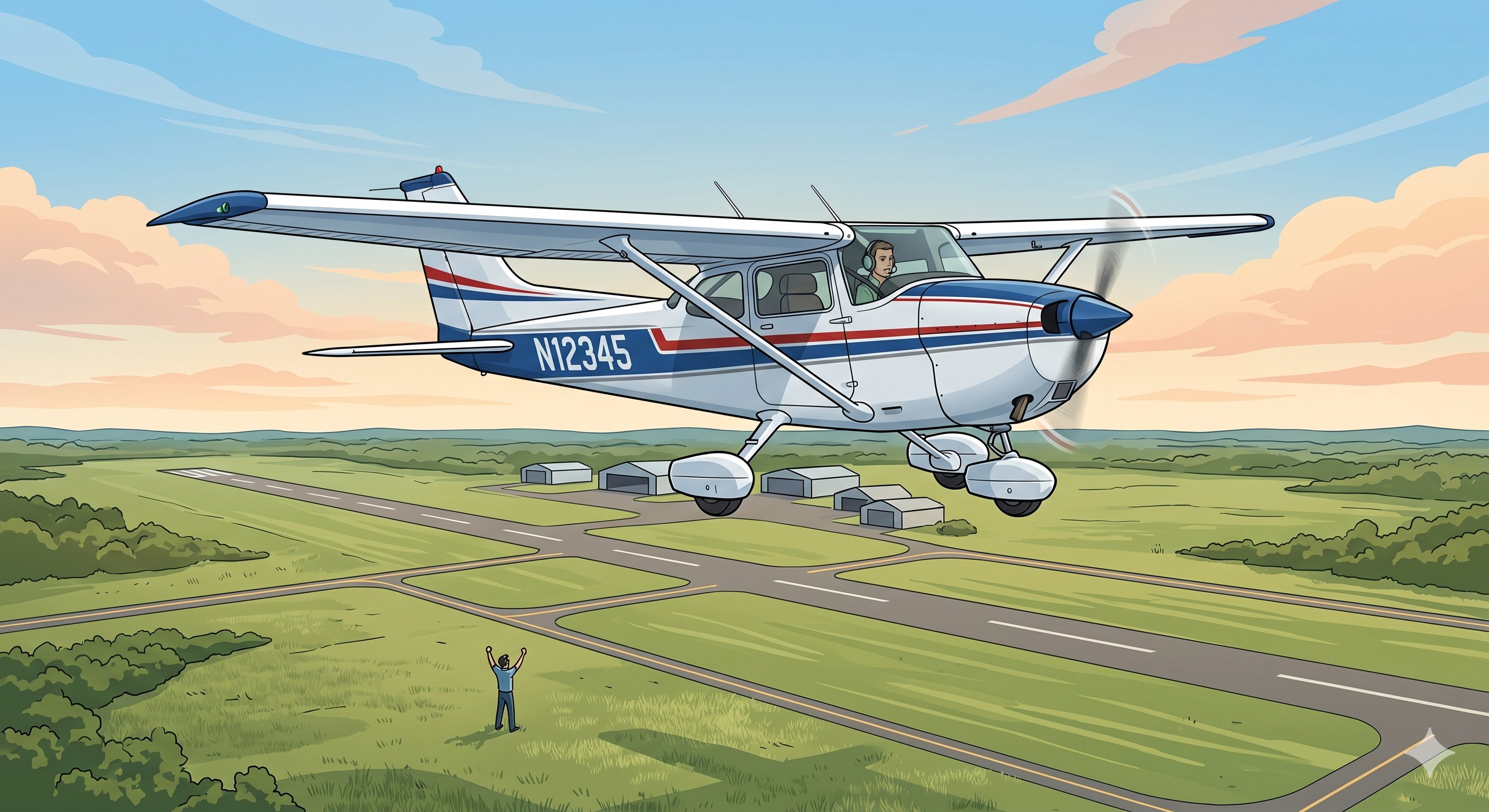
Your first solo — one of the greatest moments in aviation
When does the first solo happen?
There's no prescribed hour requirement for solo — the FAA mandates minimum flight hours for the PPL, but not for solo specifically. Your CFI will endorse you to solo when they believe you're ready, which varies significantly by student. Most students solo between 15 and 25 hours of dual instruction. Some solo earlier (10–12 hours is not unusual for students who fly frequently with strong instruction); some take 30+ hours. Neither reflects your ultimate potential as a pilot.
64 free PPL ground school videos on YouTube. Also offers a premium interactive course at freepilottraining.net with 700+ practice questions and a written exam endorsement.
What matters is readiness, not hours. A student who has flown 30 quality hours with a great instructor may be better prepared than a student with 20 hours spread across six months with inconsistent instruction.
The legal requirements before solo
Before your CFI can legally send you solo, several things must be in place:
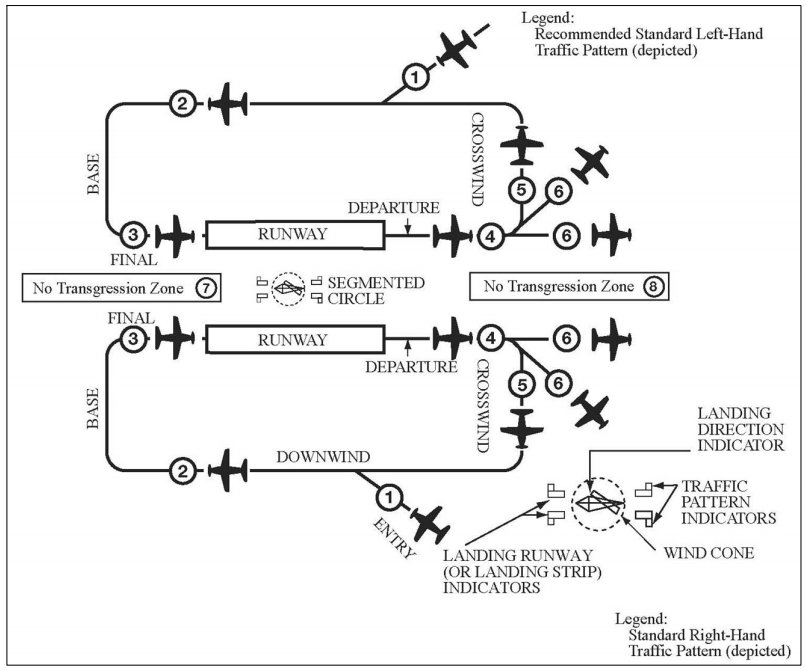
Solo traffic pattern — you will fly this rectangle alone for the first time
- Student Pilot Certificate — free from the FAA, obtained online through IACRA or at a Flight Standards District Office (FSDO). Apply early in training, not at the last minute.
- FAA Medical Certificate — third-class medical from an Aviation Medical Examiner (AME), or a valid driver's license if you'll be flying under Sport Pilot rules. Get your medical early — don't invest 20 hours in training and then discover a medical issue.
- CFI endorsements — your logbook must have specific endorsements from your CFI covering aeronautical knowledge, flight training, and solo flight at the specific airport where you'll solo. These are required by FAR 61.87.
- Written test — you don't need to have passed the FAA written test before soloing, but many CFIs won't solo a student who hasn't at least made serious progress on ground school. The two are connected — understanding the regulations and weather is part of being safe solo.
What your CFI is evaluating
Your CFI is watching for one thing above everything else before endorsing you to solo: can you consistently fly the traffic pattern, handle a normal landing, and execute the correct response to an engine failure on takeoff — without input from the right seat?
Specifically, they're looking for:
- Traffic pattern proficiency — consistent altitude on downwind (typically 800–1,000 ft AGL), appropriate power reduction at the right point, stable base leg, final approach on speed and glidepath
- Takeoff consistency — proper rotation speed, initial climb attitude, runway tracking
- Landing consistency — you don't need perfect landings, but you need consistently safe ones that don't require significant intervention
- Emergency awareness — can you correctly articulate and demonstrate the response to an engine failure immediately after takeoff? This is often the final evaluation before solo
- Radio communication — at towered airports, can you communicate correctly and respond to ATC instructions without prompting?
- Situational awareness — are you aware of other traffic? Do you know where you are in the pattern? Are you ahead of the aircraft?
The day of your first solo — what actually happens
Most first solos follow a similar pattern. You arrive, brief with your CFI, and fly several dual circuits — your CFI is doing a final evaluation to confirm you're ready today. If conditions are right and you're flying well, at some point after a landing your CFI will say something like "Okay, taxi back and do three by yourself." They'll step out of the aircraft, sign your logbook and student certificate for the specific airport, and walk away.
This is where it gets real. You taxi back to the runway alone. The aircraft feels different immediately — lighter, more responsive — because there's roughly 170 lbs less in the right seat. The sounds are the same. The controls work the same. But something is different in a way that's hard to articulate until you experience it.
You do your runup, complete your checklist, call the tower or announce on CTAF, and roll onto the runway. The takeoff is typically the calmest part — the aircraft performs normally, often better than with two people. It's when you reach pattern altitude and bank to crosswind that the reality of what's happening settles in. There is no one else in this aircraft.
What it actually feels like
Pilots describe the first solo in strikingly similar ways across decades and backgrounds. The initial emotion is usually not excitement — it's a kind of calm hyper-focus. The brain narrows to the task. The radio call sounds different coming out of your own mouth. The bank angle on crosswind feels more significant. The runway on final looks both familiar and completely new.
The touchdown on that first solo landing is almost always followed by a long exhale and something that functions like disbelief. You taxied back. You talked to yourself. You were in command. The second circuit is usually noticeably calmer — the brain has processed what's happening and normalizes it. The third is where most students start to enjoy it.
After you tie down and debrief with your CFI, a lot of schools have a tradition of cutting off the back of your shirt — a holdover from military training where instructors used to cut the shirttail of a student they could trust to fly without hand-holding. Your name and date go on a wall, or on the shirt itself. This tradition isn't universal, but it marks the moment in a way worth honoring.
How to prepare for your first solo
In the weeks before
- Know your emergency procedures cold — especially engine failure on takeoff. Practice them verbally at home until they're automatic
- Study the traffic pattern — memorize your school's pattern altitudes, entry procedures, and standard radio calls
- Get your student pilot certificate and medical done early — these cannot be rushed at the last minute
- Fly as consistently as possible — gaps in training reset your proficiency faster than you'd expect
The night before
- Get proper sleep — fatigue is a real factor in performance, especially under stress
- Review the traffic pattern mentally — visualize each phase, each callout, each checkpoint
- Check the weather forecast — not because you need perfect conditions, but so you know what to expect
- Eat a proper meal — low blood sugar affects cognitive performance measurably
The morning of
- Arrive early — a rushed preflight on your solo day is not the way to start
- Do a thorough preflight — take your time with it. You own this now
- Trust your training — if your CFI says you're ready, you're ready. Their license is on the line too
What if I'm scared?
Almost every student pilot is nervous before their first solo. This is completely normal and doesn't indicate you shouldn't be flying. The nervous energy typically transforms into focus once you start the engine. Your brain has been training for this moment — it knows what to do.
If you're experiencing specific fears (engine failure, getting lost, radio failure), talk to your CFI about them specifically. Most "what ifs" have clear procedures and practicing those procedures is the most effective fear reduction available. Fear of the unknown is always worse than fear of a specific, understood thing.
The one exception: if you feel genuinely not ready on the day your CFI proposes to solo you, say so. A good CFI will listen. It is always better to do one more dual circuit than to solo when you don't feel prepared. But be honest with yourself about whether you're not ready versus whether you're nervous — they feel similar and are very different things.
After your first solo — what changes
The first solo is a turning point in training, not an ending. After solo, your training shifts — more solo flights, cross-country training, and building toward the checkride. The skills that come after solo (navigation, night flight, instrument training) are genuinely harder than the pattern work before it.
Most students find the period immediately after solo to be a confidence peak followed by a humbling — the pattern is familiar, but cross-country navigation reveals how much there still is to learn. This is normal and part of the process. Embrace it. You are now a pilot-in-command of an aircraft in the national airspace system, with responsibility for your own decisions. That starts now.
Log it properly. Your first solo gets its own logbook entry — and many pilots write a short note in the remarks column. Date, N-number, airport, and a few words. You'll read that entry for the rest of your life.