Wet vs dry rates — what you're actually paying for
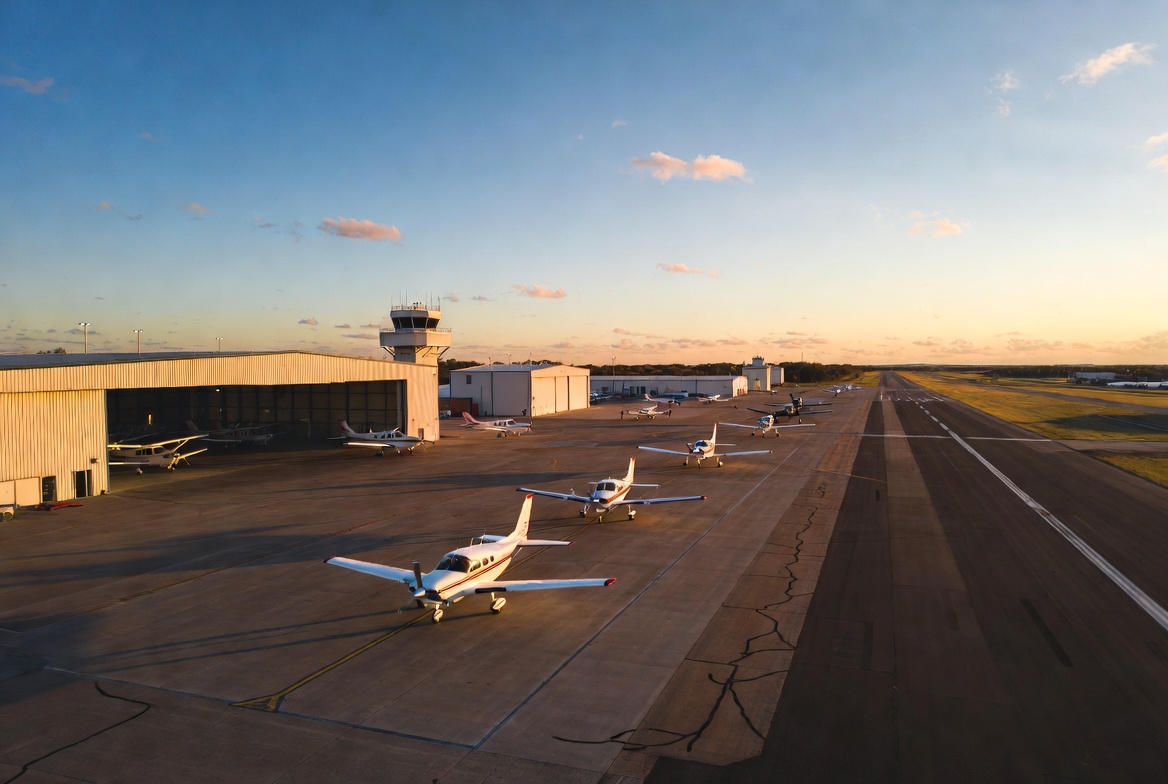
Aircraft rental is quoted as either wet (fuel included) or dry (fuel not included). Most flight schools and FBOs rent wet — the rate includes avgas at that school's fuel price. Flying clubs often rent dry, meaning you pay the rental rate plus whatever fuel you pump.
Wet rates are simpler for budgeting; dry rates can be cheaper if you're disciplined about fueling efficiently or if the club uses self-serve fuel at a lower price. Always ask which type you're quoted — a $130/hr dry rate at $8/gallon fuel and 8 GPH burn is actually $194/hr effective, more expensive than a $175/hr wet rate.
National rental rate averages by aircraft type — 2026
| Aircraft | National avg wet | Low end | High end (metro) | Common use |
|---|---|---|---|---|
| Cessna 172 (older) | $150/hr | $130 | $185 | Primary training |
| Cessna 172S/SP (G1000) | $185/hr | $155 | $240 | Training, cross-country |
| Piper Cherokee/Archer | $155/hr | $130 | $195 | Training, touring |
| Diamond DA40 | $190/hr | $160 | $240 | Training, touring |
| Cessna 182 | $210/hr | $175 | $270 | High-performance, touring |
| Piper Arrow (complex) | $230/hr | $185 | $300 | CPL training, instrument |
| Piper Seminole (multi) | $350/hr | $280 | $450 | Multi-engine rating |
| Cessna 172 LSA | $120/hr | $95 | $155 | Sport Pilot training |
Regional variation — where you train matters
Aircraft rental costs vary significantly by region, driven primarily by real estate costs, fuel prices, and local demand. Here's the honest geographic picture:
64 free PPL ground school videos on YouTube. Also offers a premium interactive course at freepilottraining.net with 700+ practice questions and a written exam endorsement.
- New York metro, Los Angeles, San Francisco Bay Area, Boston — highest rates nationally. Expect $195–$260/hr for a C172 at a commercial FBO. Flying clubs help, but the baseline is high.
- Phoenix, Las Vegas, Dallas, Denver — moderate rates, typically $155–$210/hr. Good weather means high aircraft utilization which spreads fixed costs.
- Midwest (Ohio, Indiana, Kansas, Iowa) — lowest rates nationally. $130–$170/hr for a C172 is common. Lower cost of living reduces operating costs across the board.
- Florida — moderate, $150–$200/hr. High training volume keeps rates competitive despite warm weather premium.
- Mountain West (Colorado, Utah) — moderate, $160–$220/hr. High-density altitude is factored into maintenance costs.
FBO vs flying club — the real cost difference
Flying clubs typically charge $20–$60/hr less than commercial FBOs for equivalent aircraft. The tradeoff is an upfront membership fee ($500–$3,000) and monthly dues ($50–$200). Here's when a flying club makes financial sense:
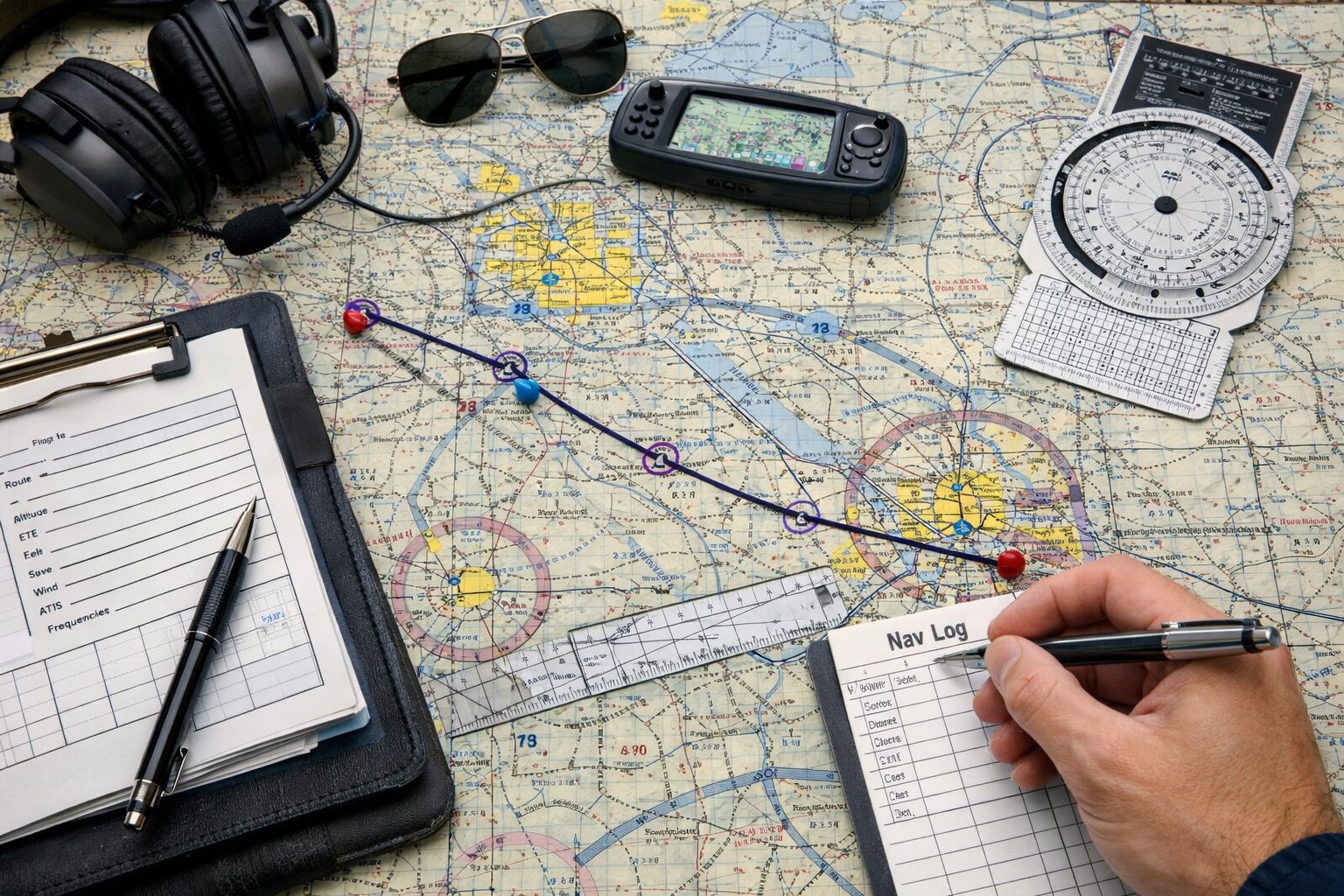
FBO rate: $180/hr | Club rate: $140/hr | Club join fee: $1,200 | Club monthly dues: $80
Savings per hour: $40 | Hours to break even on join fee: 30 hours | Annual break-even: If you fly more than ~3 hrs/month, the club is cheaper after year 1.
Flying clubs also tend to have better aircraft availability through member scheduling systems, a community of pilots to fly with, and often better-maintained aircraft because members have ownership pride. See our full flying club vs. FBO comparison.
What Hobbs vs Tach time means for your bill
Rental time is measured one of two ways:
- Hobbs time — the Hobbs meter runs whenever the engine is running (and sometimes whenever the master is on or wheels are off the ground). Most rentals use Hobbs. You pay for every minute of engine operation.
- Tach time — measured by engine RPM. At cruise RPM, tach time runs slightly slower than real time; at idle (taxi, run-up), it runs significantly slower. Tach billing is typically more favorable to the renter.
When comparing prices between schools, always ask which billing method they use. A $160/hr Hobbs rate and a $155/hr Tach rate may be nearly equivalent in practice.
Minimum rental times and block fees
Many schools impose a minimum rental time — often 1 hour per reservation — meaning a 45-minute local flight gets billed as a full hour. Some charge block rates for longer reservations. Ask about minimums before booking, particularly if you plan to do short local flights.
What's not included in the rental rate
Even with a wet rental, several costs are not included:
- Flight instruction — CFI rates are separate ($60–$110/hr on top of aircraft rental)
- Landing fees — some airports charge per-landing fees ($5–$25), particularly at busier Class C/B airports
- Ramp fees — some FBOs charge ramp fees if you don't buy their fuel
- Tie-down — overnight parking away from home base
- Insurance deductible — if you damage the aircraft, you may be liable for the deductible (often $500–$2,500)
Renter's insurance — get it
Aviation renter's insurance covers the hull damage deductible and liability in case of an incident. It costs approximately $200–$400/year for a policy covering most GA aircraft. Given that a C172 hull value is $80,000–$150,000+, paying the deductible out of pocket on a training mishap without insurance is a real financial risk. AOPA and several aviation insurance brokers offer renter's policies.
Tips to reduce rental costs
- Join a flying club if you fly more than 2–3 hours per month
- Fly during off-peak hours — some schools offer lower rates for early morning or weekday bookings
- Consider older aircraft — a well-maintained 1980s C172 without glass avionics rents for $30–$50/hr less than a G1000-equipped model. For building hours, the older aircraft works fine.
- Check multiple airports — airports 20–30 miles from major metros often have significantly lower rates. If you can commute to fly, the savings add up.
- Ask about block discounts — some schools offer discounts for prepaying blocks of hours
- Share flights legally — split fuel costs pro-rata with passengers under FAR 61.113
Use our flight training cost estimator to calculate your total PPL training cost based on your region and expected hours. And our flying club calculator runs the exact numbers for your situation.