Aviation career guides
Why flight instruction is the standard first job
After earning a Commercial Pilot Certificate, most pilots have around 250–300 flight hours. To qualify for an airline ATP they need 1,500. The most common — and most educational — way to build those 1,250 hours is flight instruction. You get paid to fly, you deepen your own knowledge by teaching it, and you build the hours and experience needed for your next step.
Instructing isn't just a means to an end. The best CFIs are genuinely excellent pilots — teaching forces you to understand the fundamentals at a level that passengers never require. Many pilots who instruct for 2–3 years say it made them far better aviators than any other path would have.
CFI certificate requirements
To become a Certified Flight Instructor you need:
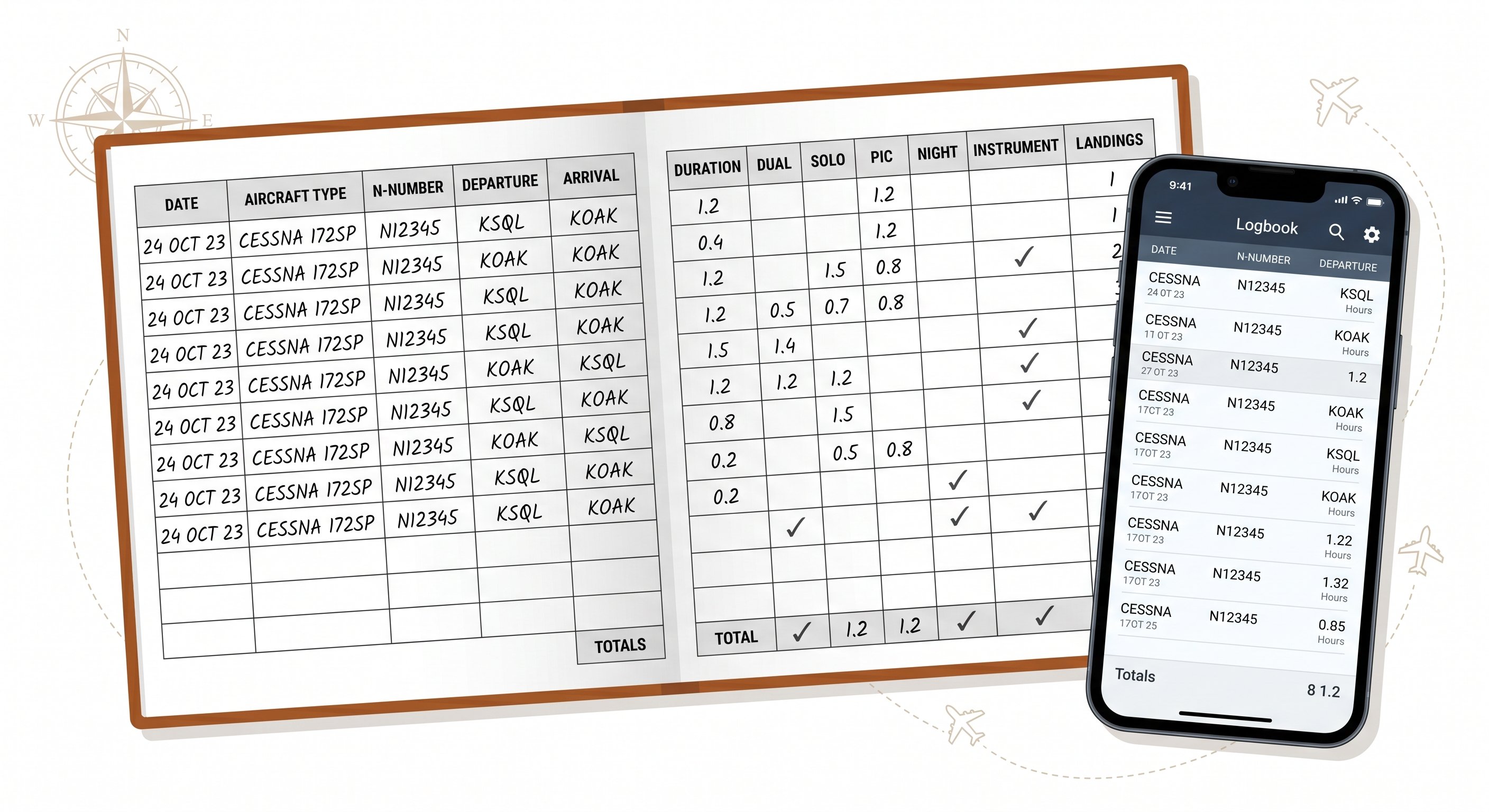
- Commercial Pilot Certificate with instrument rating
- Pass the FAA Fundamentals of Instruction (FOI) written test
- Pass the CFI Airplane written test (if not already done)
- Log 15 hours PIC in the category/class you want to instruct
- Pass the CFI practical test (one of the hardest checkrides in aviation)
CFII — Instrument Instructor
The Certified Flight Instructor — Instrument rating allows you to instruct for the instrument rating. Most CFIs add this within their first year. It doubles the types of students you can teach and increases hourly rate at many schools. Requirements are similar to CFI with additional instrument-specific testing.
MEI — Multi-Engine Instructor
The Multi-Engine Instructor rating allows you to give instruction in multi-engine aircraft. Requires a Multi-Engine Commercial rating. Not all CFIs pursue this, but it increases earning potential at schools with multi-engine fleets.
The CFI checkride is hard. Failure rates are higher than most other checkrides. Your DPE expects you to teach, not just demonstrate — they'll ask you to explain maneuvers as if to a student, catch intentional errors they introduce, and demonstrate proper spin training technique. Prepare thoroughly and consider a CFI prep course.
What CFIs actually earn
CFI pay varies significantly by location, school type, and demand. Here's the realistic range in 2026:

| Setting | Pay structure | Annual range |
|---|---|---|
| Part 61 school (local) | $25–45/hr flight time | $35,000–$55,000 |
| Part 141 school | $35–55/hr or salary | $45,000–$65,000 |
| University program | Salary + benefits | $50,000–$75,000 |
| ATP-affiliated school | Salary + flow program | $50,000–$70,000 |
| Independent CFI | $75–150/hr all-in | $60,000–$100,000+ |
Going independent: Experienced CFIs who build their own student base and charge $100–150/hour can out-earn school-employed instructors significantly. The tradeoff is the hustle of finding students and the administrative overhead of running a small business.
How fast do you build hours as a CFI?
A busy CFI at a well-staffed school can log 70–90 flight hours per month. At that rate, reaching 1,500 hours from 250 takes roughly 14–18 months of full-time instructing. More realistic at a typical school is 50–70 hours/month, putting the timeline at 18–30 months.
Factors that affect hour-building rate: location and weather (desert schools fly year-round), school size and student pipeline, your own availability, and whether you pursue additional ratings like CFII and MEI that allow more types of instruction.
What the job is really like
Honest take: flight instruction is simultaneously one of the most rewarding and most exhausting jobs in aviation. You'll fly with students who frustrate you, scare you occasionally, and occasionally amaze you. You'll do the same maneuver hundreds of times. You'll spend as much time in ground school as in the air.
The pilots who thrive as CFIs are genuinely patient teachers who find satisfaction in watching a student improve. Those who grit through it purely to build hours usually do fine, but it's a long 18 months if you hate every minute.
The good news: most CFIs report that instructing made them dramatically better pilots. Teaching someone to land forces you to articulate exactly what a good landing feels like. You will know this aircraft better after 1,000 hours of instruction than you ever would from 1,000 hours of solo flying.
When to move on
Most CFIs target their next career step when they reach 1,000–1,500 total hours and have their ATP written test passed. Signs it's time to apply to regionals or charter:
- You have 1,500+ total hours (or 1,000 with aviation degree)
- You have the required cross-country, night, and instrument hours for ATP
- You've passed the ATP written knowledge test (valid for 60 months)
- Regional airline applications are taking 2–6 months — apply early
List your CFI profile on our directory. If you're already instructing and want to attract more students, a profile on our CFI finder puts you in front of student pilots actively searching for an instructor in your area. Basic listing is free.