Why chart currency matters
VFR sectional charts contain airspace boundaries, obstacle information, airport data, and NAVAID positions that change regularly. Flying with an out-of-date chart is technically a violation of FAR 91.103 (preflight planning) and is genuinely dangerous — a new building, changed airspace, or closed NAVAID won't be on an old chart.
Sectional charts update on a 56-day cycle. That means you need a new chart roughly every two months if you're flying cross-countries regularly. Digital charts in ForeFlight and Garmin Pilot update automatically — which is one of the strongest arguments for using an EFB.
What charts you need
Sectional Aeronautical Charts (1:500,000)
The standard VFR chart. One sectional covers a large region — you'll need the chart that covers your training area and any cross-country destinations. The US is divided into 37 sectional charts. Common ones for student pilots include Los Angeles, Seattle, Dallas-Fort Worth, New York, Miami, Chicago, Denver, and San Francisco depending on where you train.
Price: ~$10 each. Available at Sporty's, Pilot Mall, your local FBO, and most aviation supply stores.
Terminal Area Charts (TAC) — 1:250,000
TACs cover the complex airspace around the busiest Class B airports at a larger scale, making them easier to read. If you train near a Class B airport (LAX, JFK, ORD, ATL, DFW, etc.) you need the TAC for that region in addition to the sectional. TACs also update on the 56-day cycle.
Price: ~$10 each.
Chart Supplement (formerly Airport/Facility Directory)
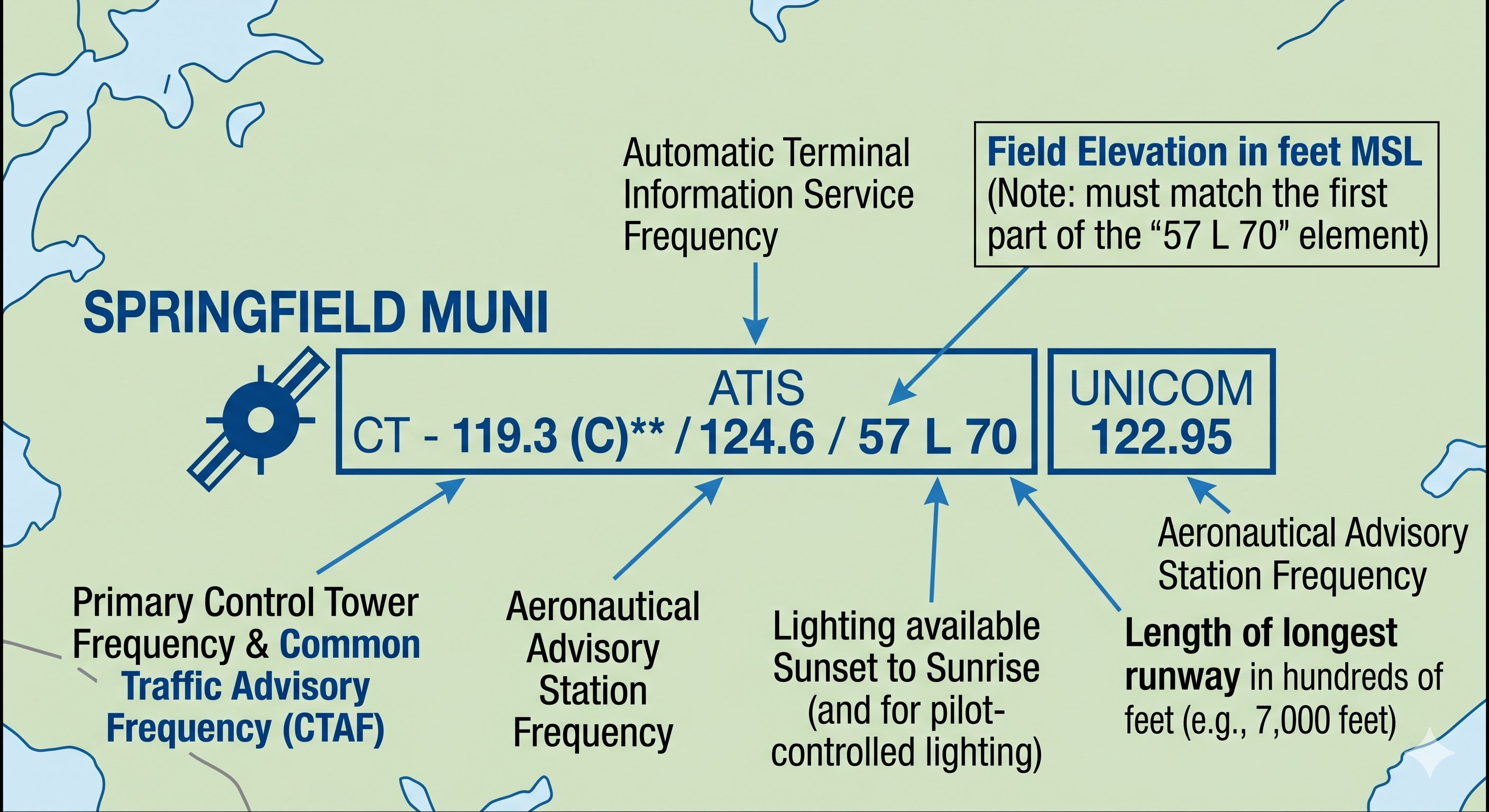
The Chart Supplement is a bound book published by the FAA covering every public-use airport in a region — runway lengths, lighting, frequencies, services, instrument procedures, and special notices. It's updated every 56 days alongside the charts.
You need the Chart Supplement for your region for your checkride — your DPE will ask you to look up airport information from it. The FAA publishes these free online as a PDF. Many pilots print the pages relevant to their training airports rather than buying the full bound volume.
Bound volume price: ~$7–10. Free PDF download at FAA.gov.
ForeFlight and Garmin Pilot include current digital charts in their subscriptions. Digital charts update automatically and are legally acceptable for flight. However, your DPE will likely hand you a paper sectional during the checkride oral — know how to read both.
Buying charts — our picks
- The sectional chart covering your training airport
- TAC if within 100nm of a major Class B airport
- Chart Supplement for your region (or download free PDF)
- A tube or flat mailer to store charts without creasing
- Check the chart edition date before each cross-country
- Charts expire 56 days after the effective date printed on them
- Subscribe to FAA chart update notifications at faa.gov
- ForeFlight shows chart expiration date in the app
Buy by region — sectional charts at Sporty's
Sporty's always carries the current FAA chart edition — they update inventory with every 56-day cycle. Select your region below and order with confidence that you're getting the latest charts.
- Every public-use airport in your region — runway lengths, lighting, frequencies
- Special procedures, noise abatement, and local notices
- VFR waypoints and visual checkpoints
- Required by your DPE during the checkride oral exam
- Updates every 56 days alongside sectional charts
- Download the PDF free from FAA.gov — same content, no cost
- Print only the pages relevant to your training airports
- Most student pilots use the free PDF — only buy the bound volume if your CFI requires it
How to fold a sectional chart
A full sectional chart is large. The standard pilot fold reduces it to kneeboard size and keeps your area of interest visible. Fold lengthwise in thirds, then accordion-fold horizontally so your route is on top. YouTube has dozens of videos demonstrating the standard pilot fold — watch one before your first cross-country flight. A poorly folded chart in a busy cockpit is a genuine distraction.
Digital vs. paper — the honest answer
| Format | Cost | Always current | Checkride valid | Works without power |
|---|---|---|---|---|
| Paper sectional | ~$10/chart | ✗ expires in 56 days | ✓ | ✓ |
| ForeFlight / Garmin Pilot | ~$8/mo | ✓ auto-updates | ✓ | ✗ needs battery |
| FAA PDF download | Free | ✗ you must re-download | ✓ | ✓ if printed |
Use digital charts for day-to-day flying, buy one current paper sectional for your checkride. Your DPE wants to see that you can read a paper chart. Having one current paper sectional and the Chart Supplement in your checkride binder satisfies this requirement while letting you use ForeFlight for everything else.