Do you need a dedicated flight bag?
Not immediately — but once you start cross-country training you'll have enough gear that throwing it all in a regular backpack becomes genuinely annoying. A dedicated flight bag or well-organized backpack keeps everything accessible and makes preflight organization much faster.
Here's what you'll typically carry by the time you're doing cross-countries:
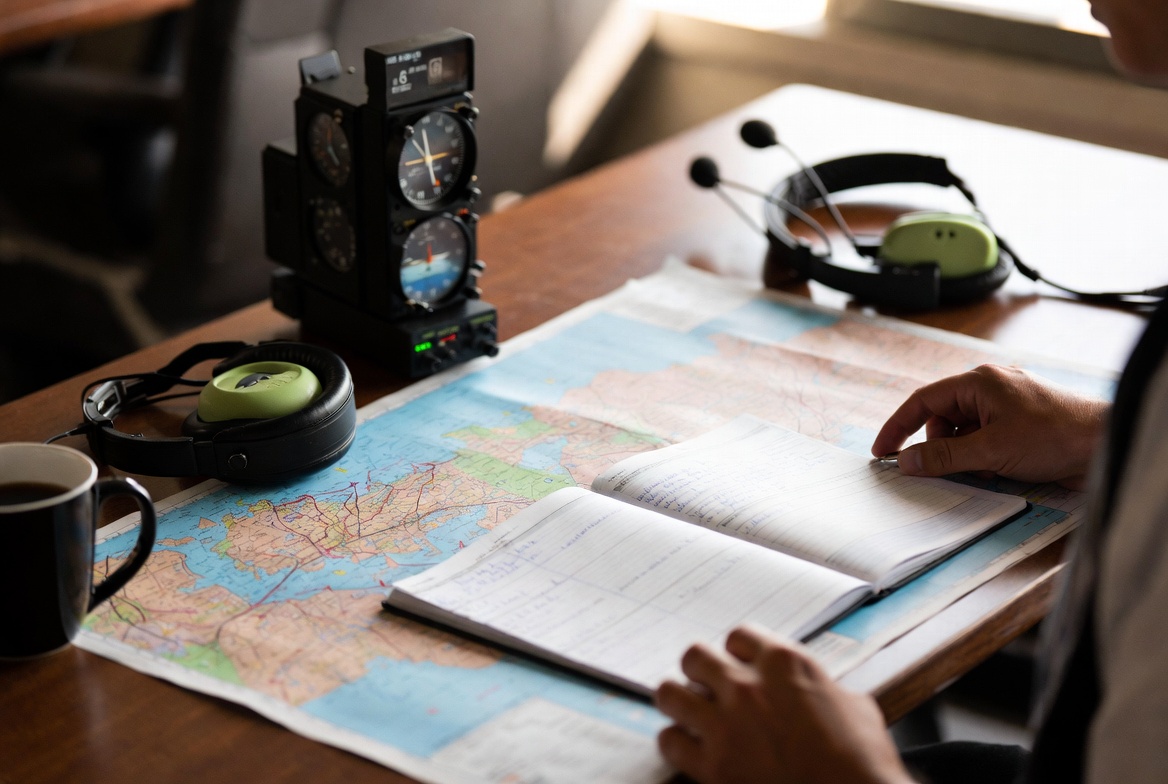
- Headset (the largest item — dictates bag size)
- Kneeboard
- iPad and mount hardware
- Logbook
- Sectional chart(s)
- Chart Supplement pages
- E6B and plotter
- Sunglasses
- Spare pencils and notepads
- Water bottle and snacks for long flights
- Aircraft documents (if you own the aircraft)
That's more than a standard school backpack handles gracefully, especially with a headset in the mix.
Our pick — Sporty's Pilot Flight Bag
- Dedicated headset compartment — padded and sized correctly
- Chart tube holder keeps sectionals from creasing
- Multiple organized pockets for small gear
- Fits under most GA aircraft seats
- Comfortable shoulder strap and carry handles
- Durable nylon construction
- Screams "pilot" — obvious at airports and FBOs
- No laptop compartment for larger tablets
- Not as versatile as a daily-use backpack
Premium pick — Brightline Flex System
- Modular — add or remove pouches as your kit grows
- Exceptional organizational system — everything has a place
- Backpack configuration comfortable for long hauls
- Used by professional and airline pilots
- Outstanding durability — lasts a career
- Expensive — overkill for a student pilot
- Modular system requires buying multiple components
- Heavier than simpler bags even when empty
The plain backpack option — and when it's fine
A well-chosen plain backpack works perfectly as a flight bag and is significantly cheaper. Here's what to look for:
- At least 25–30 liters capacity — you need space for the headset plus everything else
- A laptop-sized main compartment — your headset fits here with the headband removed, or in a separate outer pouch
- Multiple organized pockets — not just one giant sack
- Fits under an aircraft seat — most GA aircraft have limited storage; a soft-sided bag is better than a rigid one
A $50–80 Osprey or Cotopaxi daypack meets all of these criteria and serves as a daily bag too. If you're on a tight budget, use a quality backpack you already own and save the money for a better headset.
Headset bags — a note
Most headsets come with a carrying bag or case. If yours didn't, a simple mesh drawstring bag ($5–10) works perfectly to protect it inside your flight bag. You don't need a dedicated hard-shell headset case as a student — save that for when you own a Bose A30.
Quick comparison
| Option | Price | Headset pocket | Chart storage | Daily use |
|---|---|---|---|---|
| Sporty's Pilot Bag | ~$65 | ✓ dedicated | ✓ tube | Aviation-specific |
| Brightline B7 Flex | ~$200 | ✓ modular | ✓ modular | Aviation-specific |
| Quality backpack (30L) | $50–80 | Fits in main | Rolled in pocket | ✓ versatile |
| Budget bag you own | $0 | Fits if large enough | Manageable | ✓ |
Bottom line: If you're serious about flight training and want a dedicated setup, the Sporty's bag is the right $65 investment. If you're budget-conscious, use a large quality backpack. Either works — your headset and logbook don't care what they're riding in.